How I Built This
Searchable database of How I Built This entrepreneurs and entrepreneurship stories. Find episodes, founder profiles, and company histories from Guy Raz's iconic podcast.
Advice Line with Daymond John of FUBU
Daymond John joins Guy Raz for an Advice Line episode to field questions from early-stage founders, including Cristopher from Chicago seeking to scale his family salsa brand from farmers markets to retail, Darcy in Australia looking to broaden his protein bar brand’s messaging beyond core fans, and Seema in Canada wanting tactics to boost B2B sales for her ethical kitchen linen line. Daymond also shares what makes a standout Shark Tank pitch and reflects on the 10-year legacy of How I Built This, while inviting founders to submit their own business questions for future episodes.
YETI: Roy and Ryan Seiders. How Two Brothers Turned a $400 Cooler Into a $2 Billion Brand
Roy and Ryan were avid outdoorsmen who wanted a cooler that wouldn’t break. So they built one themselves. The result was YETI: a high-end cooler that early retailers thought nobody would buy. But serious outdoorsmen did—and eventually YETI escaped its niche, becoming a status symbol at tailgates, beaches, and soccer fields. In this episode, Roy and Ryan explain how they bootstrapped YETI, survived the sudden loss of their only manufacturing partner, and later stumbled onto the $30 product that supercharged the business. WHAT YOU'LL LEARNWhy solving a problem you personally experience can be more powerful than chasing a huge market. How YETI convinced people accustomed to $40 coolers to spend $300–$400. Why the brothers deliberately started with small independent retailers instead of chasing major chains. Why Roy and Ryan chose not to aggressively fight copycats How the sudden loss of their only manufacturer nearly destroyed YETI—but ultimately made the company stronger. How the brothers bootstrapped YETI for years without venture capitalWhy a simple $30 stainless-steel cup—not the famous $400 cooler— transformed YETI into a mass-market brand. TIMESTAMPS 6:10 — A free-range childhood of hunting and exploring10:02 — Early businesses: fishing rods and boats 15:30 — Roy’s early frustrations with coolers. “The hinges would break, the latches would snap.” 31:20 — The last-minute flight to the Philippines that led to YETI40:53 — People didn’t love the name–but they remembered it 47:49 — Why people were willing to spend $400 on a cooler 1:01:18 — The phone call that nearly pulled the plug on the business1:06:30 — How Roy and Ryan turned a catastrophe into a stronger company1:22:27 — From coolers to cups: A $30 product changed the trajectory of the brand 1:25:44 — Why the founders eventually moved on from YETI This episode was researched and produced by Carla Esteves, with music by Ramtin Arablouei. It was edited by Neva Grant. Our audio engineers were Maggie Luthar and Jimmy Keeley. Follow How I Built This:Instagram → @howibuiltthisX → @HowIBuiltThisFacebook → How I Built ThisFollow Guy Raz:Instagram → @guy.razYoutube → guy_razX → @guyrazSubstack → guyraz.substack.comWebsite → guyraz.com
Advice Line with Carlton Calvin of Razor
Carlton Calvin returns to the Advice Line to help early-stage founders work through real business bottlenecks. Sean Barasa asks how to grow his party game Eulogy beyond 1,000 units, Shereen Tippett wants to escape Etsy saturation and build a direct-to-consumer stationery brand, and Mark Ganter needs a strategy for his premium espresso martini when the market is racing toward canned convenience. Guy Raz moderates as Carlton shares practical guidance on licensing, social presence, product focus, and trend timing.
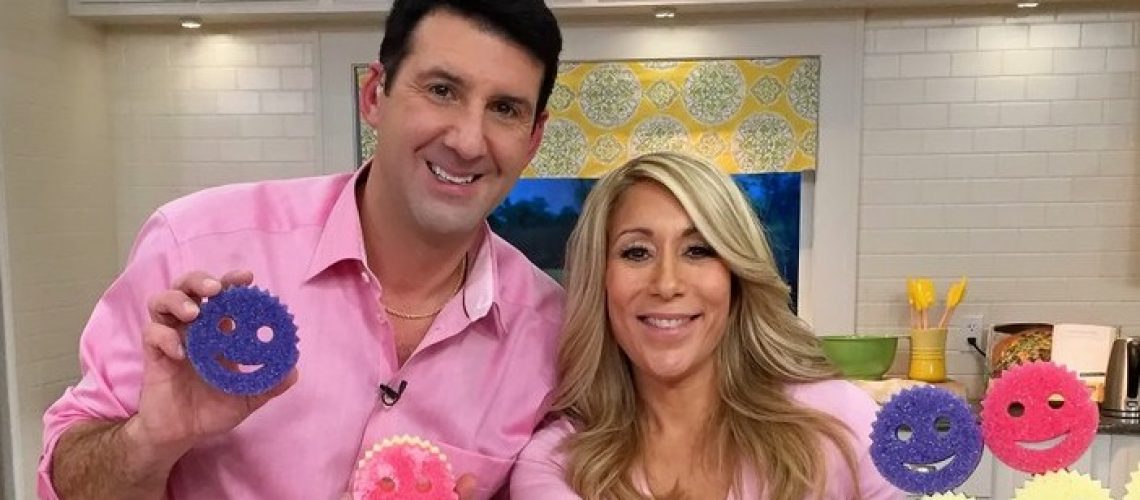
Aaron Krause
Aaron Krause is the founder and CEO of Scrub Daddy, creator of Shark Tank's most successful product. A serial inventor, he sold his first company to 3M. Since the 2012 pitch, Scrub Daddy has sold hundreds of millions of units. Krause holds eight patents and continues inventing.

Amy Errett
Amy Errett is the Founder and CEO of Madison Reed, a San Francisco beauty brand disrupting the $15 billion hair color industry with non-toxic formulas. She spent three decades in venture capital and led investment advisory firm Spectrum Group before launching the company in 2013.

Travis Rosbach
Travis Rosbach founded Hydro Flask after a 2007 trip to a sporting goods store revealed a gap in the market for safe, reusable water bottles. The Bend, Oregon entrepreneur now runs the Tumalo Group, guiding first-time inventors through product development and business growth.

Serena Dugan
Serena Dugan co-founded Serena & Lily in 2003 and served as Chief Creative Officer, shaping the brand's signature California style through her background in fine art and textile design.

NVIDIA
NVIDIA is a US technology company that invented the GPU in 1999. It started in gaming and now powers AI infrastructure, data centers, and autonomous vehicles worldwide. Founded in 1993 by Jensen Huang, Chris Malachowsky, and Curtis Priem, the company is headquartered in Santa Clara, California.
1 episode

UGG
UGG is an American fashion company known for its sheepskin boots, founded in 1978 by Brian Smith in California.
1 episode
Torchy's Tacos
Torchy's Tacos is a fast-casual taco chain founded in Austin, Texas in 2006 by Mike Rypka. Known for creative, handcrafted tacos and a bold devil-mascot brand, the company has grown from a single food truck to over 130 locations across the United States with annual sales exceeding $300 million.
1 episode

Meridith Baer Home
Meridith Baer Home is a premier luxury home staging company with over 25 years of experience designing interiors for high-value real estate. The company stages 700-900 homes at a time across offices in Los Angeles, San Francisco, New York, The Hamptons, and Miami.
1 episode